skip navigation

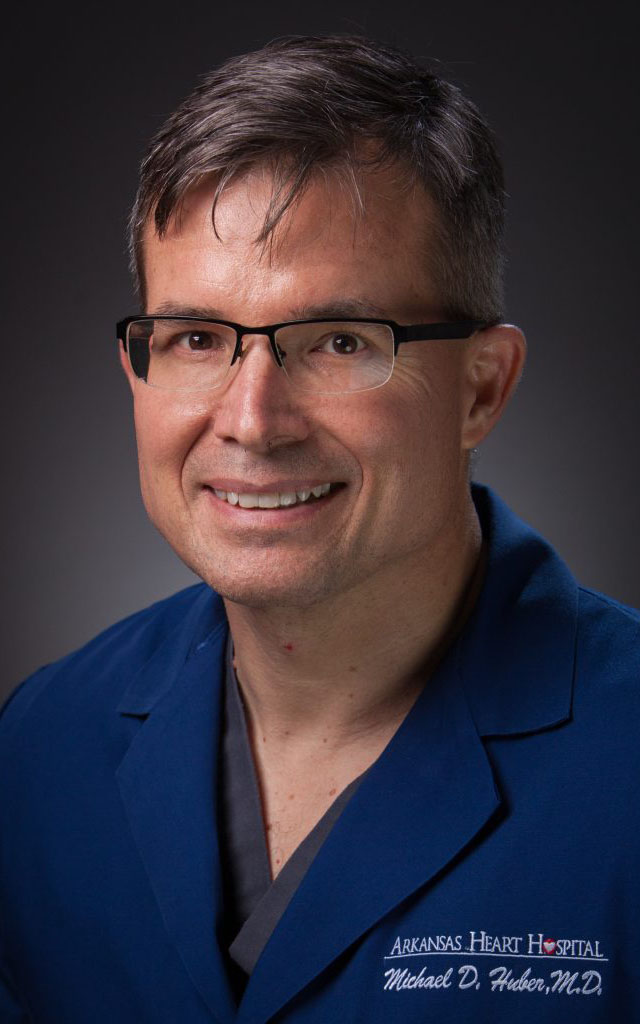
Photo of Michael Huber, M.D.

Michael Huber, M.D.


Cardiology

Biography


Contact Info:

Office:

800-264-5722

Fax:

501-664-0889

Website:

Click Here

Facility/Office:

Arkansas Heart Hospital (Consulting)
7 Shackleford West Blvd
Little Rock, AR 72211

Education:

Uniformed Services University of the Health Sciences

Residency:

Tripler Army Medical Center (Honolulu, Hawaii)

Fellowship:

Brooke Army Medical Center (San Antonio, Texas)

Certification:

Internal Medicine, Cardiovascular Disease and Nuclear Cardiology

Biography:

Dr. Michael David Huber graduated from Loyola College in Baltimore before attending medical school at the Uniformed Services University of the Health Sciences. Before joining the Arkansas Heart Hospital Clinic, he was a staff cardiologist at Landstuhl Regional Medical Center in Germany, where he cared for acutely ill soldiers sent from Iraq and Afghanistan. While at LRMC, he was director of the cardiac catheterization laboratory and the advance cardiac life support program. Dr. Huber’s skill set includes invasive, non-interventional cardiology; pacemaker implantation; nuclear cardiology; transesophageal echo; and IVC filter implantation.
Facebook


BCMC News


BCMC Recognized for Advancing Rural Stroke Care


People who live in rural communities live an average of three years fewer than urban counterparts and have a 40% higher likelihood of developing heart disease and face a 30% increased risk for stroke mortality, according to an American Heart Association’s presidential advisory on rural health. Bradley County Medical Center is committed to changing that.

For its efforts to optimize stroke care and reduce gaps in rural health outcomes, BCMC has received the American Heart Association’s Get With The Guidelines® - Stroke Rural Recognition Bronze award.

Stroke is the No. 4 cause of death and a leading cause of disability in the U.S, according to the American Heart Association’s 2026 Heart Disease and Stroke Statistics Report. A stroke occurs when a blood vessel supplying the brain is blocked by a clot or ruptures, preventing blood and oxygen from reaching brain tissue. When this happens, brain cells begin to die. Early detection and rapid treatment are critical to improving survival, minimizing disability and supporting faster recovery.